Today’s update of the IUCN Red List of Threatened Species includes 225 amphibian assessments for species ranging from southern and east Africa, Argentina, Peru, Indonesia and Papua New Guinea, and completes GAA3 for the southern Africa region. These assessments contribute to the ongoing third Global Amphibian Assessment (GAA3), which is being implemented from 2024-2028, and represent improved knowledge to inform amphibian conservation for all species included in this IUCN Red List update. Specifically, 45 of the amphibian species in this update represent first-time IUCN Red List assessments for recently described species; new information has resulted in downlisting of 11 species and uplisting of 7 species; and 12 species have been removed from the Data Deficient category.
The use of satellite imagery has provided information on the threats to Hocking’s water frog (Telmatobius hockingi) from Peru, as well as informing on the state of its habitat. This has allowed it to be moved from Data Deficient and clarified that this species is at a high risk of extinction, as with the majority of this genus. It has now been listed as Critically Endangered due to habitat fragmentation caused by large and small-scale agriculture and human settlements. In South Africa, three new Arthroleptella species were previously believed to be populations of two other wider-ranging species, which were listed in lower extinction risk categories. It is now understood that they are distinct species, and today they are listed as Near Threatened, Vulnerable and Endangered. This is not an isolated example for amphibians, and the issue of extinction risk being masked by cryptic diversity can be seen across other regions in the world.
“It is great to see progress across various different regional groups for the GAA3 update, and the completion of the southern Africa update has provided a full picture of what the amphibians in the region are facing,” said Louise Hobin, Amphibian Red List Authority for Old World Amphibians. “Thanks to the dedicated work of amphibian scientists all over the world, we are continuously gaining better insights into the incredible diversity of this species group. We are learning more about the species themselves and improving our understanding of their extinction risks—knowledge that is so important for conservation efforts”.
Proposed industrial development puts desert rain frog at risk of extinction in southern Africa
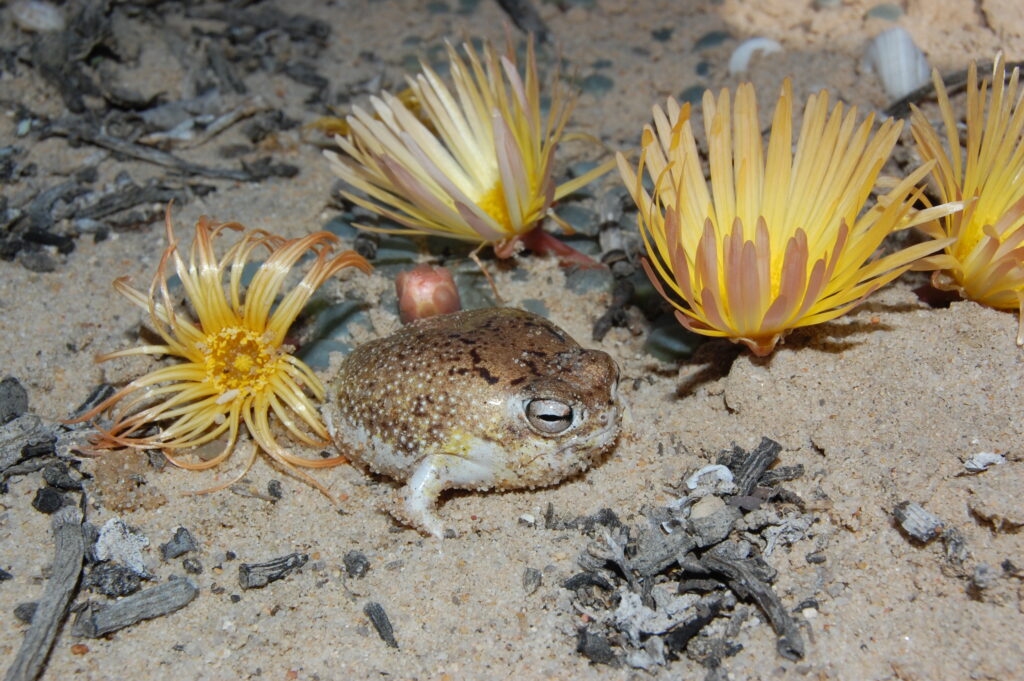
One frog had a genuine deterioration in status since its last assessment; diamond mining and proposed energy infrastructure developments along the west coast of South Africa and Namibia have caused the desert rain frog (Breviceps macrops) to move from Near Threatened to Vulnerable on the IUCN Red List. Expanding industrial developments, which include a green hydrogen project, are expected to impact up to one-third of the desert rain frog’s range in South Africa and two-thirds in Namibia within the next 20 years, predicted to cause significant population declines. Suspected demand for the desert rain frog in the pet trade has also increased following a viral video of the species calling in distress. Climate change and associated heat stress and aridification are possible further strains on this species. Without conservation action, the population is expected to decline by 20% in the next decade.
“We hope that this change in status brings about much needed attention to this species and the fragile ecosystem it represents. This frog is unique in its adaptations to an extremely arid environment and deserves to have its survival here in the long-term supported,” said Dr Jeanne Tarrant, Anura Africa Director and Co-Chair of the ASG Southern Africa Regional Group. “The species has also recently been assessed through the IUCN Green Status of Species assessment process, and with sufficient investment in research to understand the species’ ecology, along with habitat rehabilitation and protection of remaining habitats, the recovery potential of the desert rain frog is relatively high. Now is the time to highlight the species’ importance in light of impending development within its range.”
Southern Africa assessments completed for GAA3
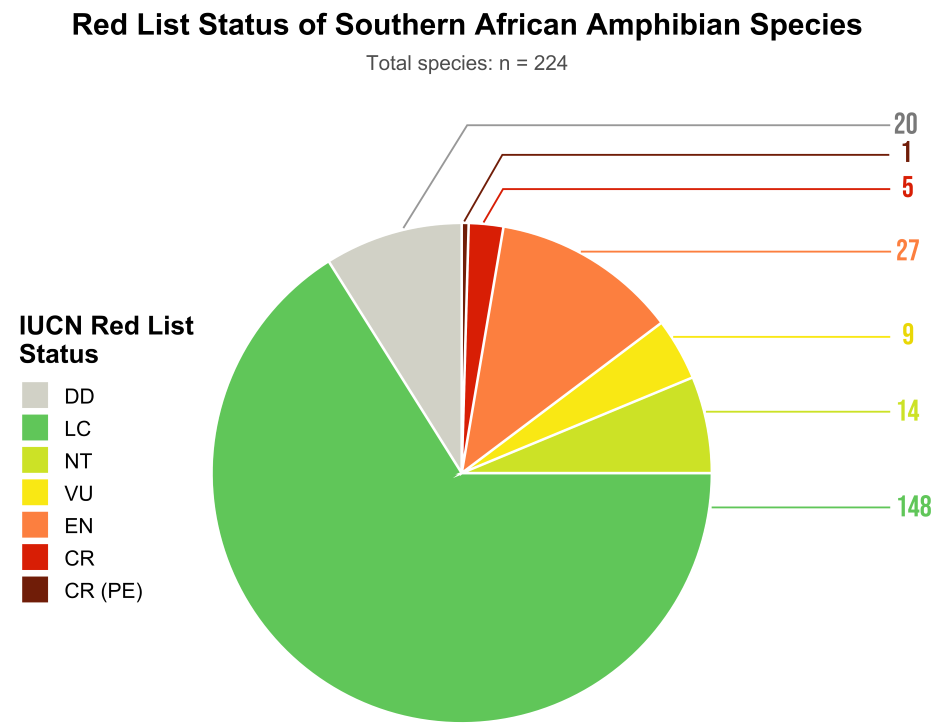
This Red List update completes the assessment of southern African amphibians for GAA3, adding to 49 assessments for this region updated in 2025. This was led by the Co-Chairs of the ASG Southern Africa Regional Group, Dr Jeanne Tarrant (Director, Anura Africa) and Joshua Weeber (Manager: Threatened Endemic Species Unit, Endangered Wildlife Trust).
The completely updated Red List assessments, and new Green Status of Species assessments will be used alongside National Biodiversity Assessments for a proposed ‘State of the Nation’s Amphibians’ strategic report for South African amphibians. This will synthesise current knowledge, report on national indicators aligned with GBF targets, assess conservation effectiveness and provide a prioritised, actionable strategy for conservation action.
“We are now keen to build on this momentum and consolidate the outputs of the Red List into a user-friendly strategy that will guide the next decade of research and conservation in South Africa. The proposed ‘State of the Nation’s Amphibians’ report will outline a strategic framework guiding research, policy, and implementation over the next decade,” added Dr Tarrant.
No Comments Yet