The State of the World’s Amphibians report, published in 2023, presented an summary of the second Global Amphibian Assessment results, including analyses aimed at guiding future amphibian conservation planning and action.
Species within the same genus share common ancestry and have similar characteristics, and this often means they are vulnerable to the same threats. The top 10 most threatened frog genera contain 12% of all threatened frogs, while almost two-thirds (64%) of threatened salamanders are among the top 10 most threatened salamander genera. Highly threatened frog genera are predominantly found in Mesoamerica and the Andes of South America, but also Madagascar and the Western Ghats of India. Exceptionally threatened salamander genera occur in Mesoamerica, the Andes of South America, China, and Japan.
The Top ten highly threatened frog and salamander genera are shown in the tables below. For both tables: only genera with at least 10 species are included. Download the full list and summary statistics of Highly Threatened Genera. Additional genera with 50% or more threatened species are included in Annex II of the State of the World’s Amphibians report.
| Genus | Number of Species (% threatened in GAA2) | Realm |
Top 10 Most Threatened Frog Genera | ||
| Aromobates | 18 (100%) | Neotropics |
| Microkayla | 23 (100%) | Neotropics |
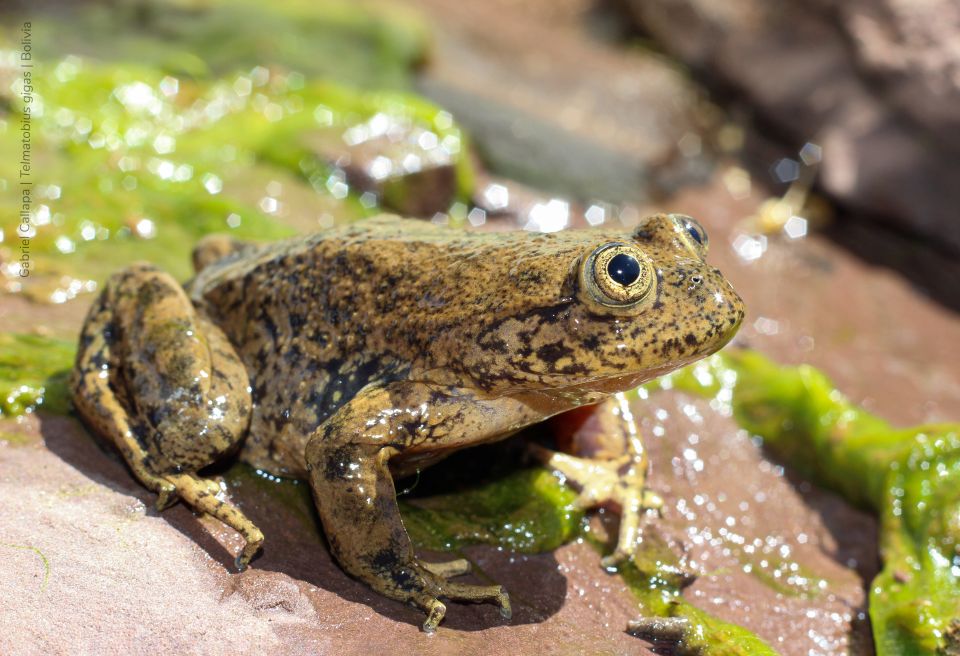
| Telmatobius | 63 (96%) | Neotropics |
| Atelopus | 97 (93%) | Neotropics |
| Micrixalus | 24 (91%) | Indomalaya |
| Osornophryne | 11 (91%) | Neotropics |
| Anodonthyla | 11 (91%) | Afrotropics |
| Plectrohyla | 19 (89%) | Neotropics |
| Pseudophilautus | 72 (89%) | Indomalaya |
| Charadrahyla | 10 (89%) | Neotropics |
Top 10 Most Threatened Salamander Genera | ||
| Pseudoeurycea | 39 (97%) | Neotropics |
| Thorius | 29 (96%) | Neotropics |
| Chiropterotriton | 23 (91%) | Neotropics |
| Tylototriton | 29 (78%) | Palearctic/Indomalaya |
| Cynops | 10 (78%) | Palearctic/Indomalaya |
| Hynobius | 55 (75%) | Palearctic/Indomalaya |
| Oedipina | 38 (74%) | Neotropics |
| Bolitoglossa | 134 (66%) | Neotropics |
| Nototriton | 20 (63%) | Neotropics |
| Paramesotriton | 14 (62%) | Palearctic/Indomalaya |
ASG has established Task Forces for some of the Highly Threatened Genera, including Atelopus, Telmatobius, and Eastern Asian Salamanders, to catalyse conservation for these groups.